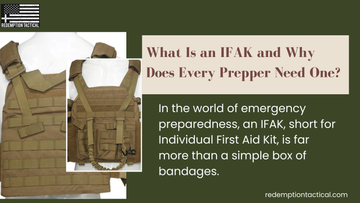
In the world of emergency preparedness, an IFAK, short for Individual First Aid Kit, is far more than a simple box of bandages. It is a compact, trauma-oriented medical pouch engineered to save lives in high-pressure situations.
Whether you are bugging out, hiking in the backcountry, or navigating a natural disaster, an IFAK provides the essential tools to respond when seconds count.
Every prepper needs one because when professional medical help is minutes or hours away, a kit that addresses life-threatening bleeding and airway issues is the only thing standing between survival and tragedy.
This is your first line of defense against serious trauma, making it one of the most practical preparations you can ever make.
The Origins and Evolution of the Individual First Aid Kit
The concept of the IFAK began with military units that required immediate access to trauma tools on the battlefield. Soldiers carried these compact kits so they could manage bleeding, airway obstructions, or chest injuries before a medic arrived. The design philosophy was simple: one pouch, one person, life-saving tools inside.
Over time, this concept expanded to civilian life. Hunters, outdoor workers, and rescue volunteers adopted the approach because of its proven efficiency. The modern prepper movement quickly recognized the advantage: a small kit packed with professional-grade trauma tools allows anyone to manage a crisis independently.
Today, IFAKs are a staple of readiness because supply chain disruptions or natural disasters can easily delay emergency services. Redemption Tactical, which focuses on practical gear and everyday readiness, reflects this mission, providing simple, accessible tools that make a difference for anyone facing the unexpected.
Also read more blog: Why Tactical Medical Training Matters?
Trauma Kit vs. Regular First Aid: Understanding the Difference

It is a common mistake to think a standard first aid kit is enough for a survival situation. A traditional kit handles "everyday" injuries like minor cuts, scrapes, and blisters. However, it lacks the specialized equipment needed for a major emergency.
An IFAK focuses specifically on the "Big Three" life-threatening threats:
- Massive Hemorrhage (Uncontrolled bleeding)
- Airway Obstruction (Inability to breathe)
- Respiratory Distress (Chest injuries)
While a normal kit uses small bandages, an IFAK utilizes a tourniquet for arterial bleeding, hemostatic gauze to clot deep wounds, and chest seals for penetrating injuries.
Furthermore, the layout of an IFAK is designed for speed; you don’t dig for supplies. You open the pouch and have immediate access to life-saving gear. Redemption Tactical emphasizes this ready-to-use philosophy, ensuring that your gear matches the level of danger you may face.
Essential Components: What Should Be Inside Your IFAK?
A solid IFAK centers on tools made for rapid trauma care. A standard kit should contain:
- Tourniquet: To stop life-threatening limb bleeding.
- Hemostatic Gauze: Impregnated with agents to accelerate clotting in deep wounds.
- Pressure Dressing: To wrap and compress injuries securely.
- Chest Seals: To treat sucking chest wounds and support breathing.
- Trauma Shears: To cut through thick clothing and gear instantly.
- Medical Gloves: To protect both the responder and the patient.
- Nasopharyngeal Airway (NPA): To keep an unconscious person's airway clear.
- Emergency Blanket: To prevent hypothermia, a common side effect of blood loss.
- Permanent Marker: To record the time of tourniquet application.
The Prepper Advantage: Why It Is Non-Negotiable?
For preppers, self-reliance is the goal. An IFAK is non-negotiable because it handles trauma that cannot wait for an ambulance. Whether in a city facing gridlock or a remote forest, this kit allows you to act during the "Golden Hour", the important window where medical intervention has the highest success rate.
Compact enough for a bug-out bag or vehicle, it ensures that your safety plan is always within arm's reach.
Building vs. Buying: Customizing Your Setup

You can either buy a pre-configured IFAK or build your own.
- Buying: Saves time and ensures you have a medically sound baseline. Most professional kits use trusted, field-tested brands.
- Building: Allows you to tailor the gear to your specific training level and environment.
Regardless of your choice, the pouch itself must be durable and easy to open. Redemption Tactical offers gear that balances simplicity with dependability, making it an excellent starting point for those who want gear that works under pressure without unnecessary complexity.
Training and Deployment
An IFAK is only as useful as your ability to use it. You don’t need to be a doctor, but you do need to understand the basics of bleeding control and wound packing. Taking a "Stop the Bleed" course or practicing with a training tourniquet will build the muscle memory needed for a real crisis. Always store your kit in a visible, accessible location, never at the bottom of a packed bag.
Final Thoughts
Investing in an IFAK is one of the most significant steps you can take toward true medical readiness. It turns a helpless bystander into a lifesaver. For high-quality, dependable gear designed for the real world, check out Redemption Tactical to find the tools you need to stay prepared.
Frequently Asked Questions
Q. What is an IFAK?
An IFAK (Individual First Aid Kit) is a specialized medical pouch designed for trauma care. It contains professional-grade tools like tourniquets and chest seals to treat life-threatening injuries like heavy bleeding and airway blockages.
Q. Why do preppers rely on an IFAK?
Preppers use them because emergency services may be delayed during disasters. An IFAK provides the essential tools to stabilize a victim during the first few critical minutes of a trauma event, ensuring survival when help is far away.
Q. What goes inside a standard IFAK?
A standard kit includes a tourniquet, hemostatic gauze, pressure dressings, chest seals, trauma shears, medical gloves, a nasopharyngeal airway, and an emergency blanket, all organized in a durable, quick-access pouch for rapid deployment.
Q. Is an IFAK the same as a normal first aid kit?
No. A normal kit is for minor issues like small cuts or headaches. An IFAK is a trauma kit designed to stop massive hemorrhaging and manage respiratory distress. They serve completely different purposes in an emergency scenario.
Q. Do I need training to use an IFAK?
While the tools are simple, basic training is highly recommended. Taking a "Stop the Bleed" course teaches you how to properly apply a tourniquet and pack a wound, which significantly increases the effectiveness of the gear in your kit.
Q. Can I carry an IFAK daily?
Yes. Modern IFAKs are designed to be compact and modular. They can be easily attached to belts, stored in vehicle glove boxes, or kept inside a daily backpack, making them perfect for everyday carry and immediate accessibility.
Q. Should I build my own kit or buy one?
Both are viable. Buying a ready-made kit ensures you have all the essentials instantly. Building your own allows for customization based on your specific skills. Many people start with a pro kit and add items as they gain more medical training.
Q. How often should I check my IFAK?
You should inspect your kit every few months. Check for expired items like hemostatic gauze, ensure the seals on dressings are intact, and verify that the tourniquet is in good condition. Always replace any used or damaged components immediately.
Q. Where should I store my IFAK?
Store it in a high-visibility, easily reachable location. Common spots include the headrest of a car, the outside of a backpack, or a dedicated "emergency shelf" at home. Speed of access is the most important factor when choosing a spot.
Read more blog: